
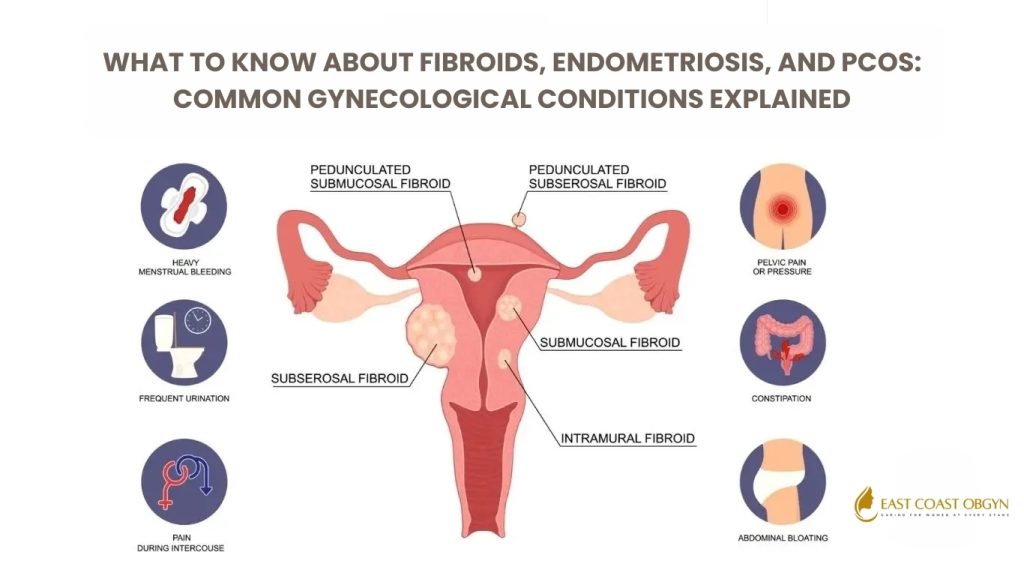
Pelvic pain, heavy periods, missed periods, acne, or trouble getting pregnant can have more than one possible cause. Endometriosis, uterine fibroids, and polycystic ovary syndrome (PCOS) can overlap in a few symptoms, but they are different conditions that affect the body in different ways. Knowing the difference helps you describe what is happening to your OBGYN and get the right next step. If your cycle has changed, our guide to irregular periods and when to see a doctor can help you recognize what to track before your visit.
The short version: fibroids are growths in or on the uterus, endometriosis involves tissue similar to uterine lining growing outside the uterus, and PCOS is a hormonal condition that can affect ovulation and metabolism. A symptom list cannot confirm which condition you have. Your history, exam, imaging, and lab work matter.
Fibroids vs Endometriosis vs PCOS: Key Differences at a Glance
Fibroids, endometriosis, and PCOS are not different names for the same condition. Fibroids most often cause heavy bleeding or pressure, endometriosis is more often linked with painful periods and pelvic pain, and PCOS commonly causes irregular ovulation, irregular periods, acne, or excess hair growth. Any of them can affect fertility, and some people have more than one condition.
| Condition | What it is | Symptoms that often stand out | Period pattern | How an OBGYN may evaluate it |
|---|---|---|---|---|
| Uterine fibroids | Noncancerous growths made of muscle tissue in or on the uterus | Heavy or prolonged bleeding, pelvic pressure, frequent urination, constipation | Often heavy or longer than usual | Pelvic exam and ultrasound; MRI or other testing in selected cases |
| Endometriosis | Tissue similar to uterine lining growing outside the uterus | Severe cramps, pain during sex, pain with bowel movements or urination during periods, chronic pelvic pain | May be painful; bleeding can be normal, heavy, or irregular | Symptom history, exam, ultrasound or MRI when useful, and sometimes laparoscopy |
| PCOS | A hormonal condition that can interfere with regular ovulation | Infrequent periods, acne, excess facial or body hair, scalp hair thinning, weight changes | Often infrequent, irregular, or absent | Medical history, exam, hormone and metabolic testing, and sometimes ultrasound |
These patterns are clues, not rules. For example, heavy bleeding can occur with fibroids or endometriosis, and someone with PCOS can also have painful periods for another reason. That is why a careful evaluation matters more than trying to self-diagnose from one symptom.
Uterine Fibroids: Noncancerous Growths in the Uterus
Uterine fibroids are noncancerous growths that develop from the muscle of the uterus. They are also called leiomyomas or myomas. Some are very small and cause no symptoms. Others change the shape of the uterus or press on nearby organs, which can make periods, urination, or bowel movements harder to manage.
Common fibroid symptoms
Heavy or prolonged menstrual bleeding is one of the symptoms most associated with fibroids. Other possible signs include:
- Pelvic pressure, fullness, or pain
- Bleeding between periods
- Frequent urination or trouble emptying the bladder
- Constipation
- Low back or leg pain
- Trouble getting pregnant, depending on the fibroid’s size and location
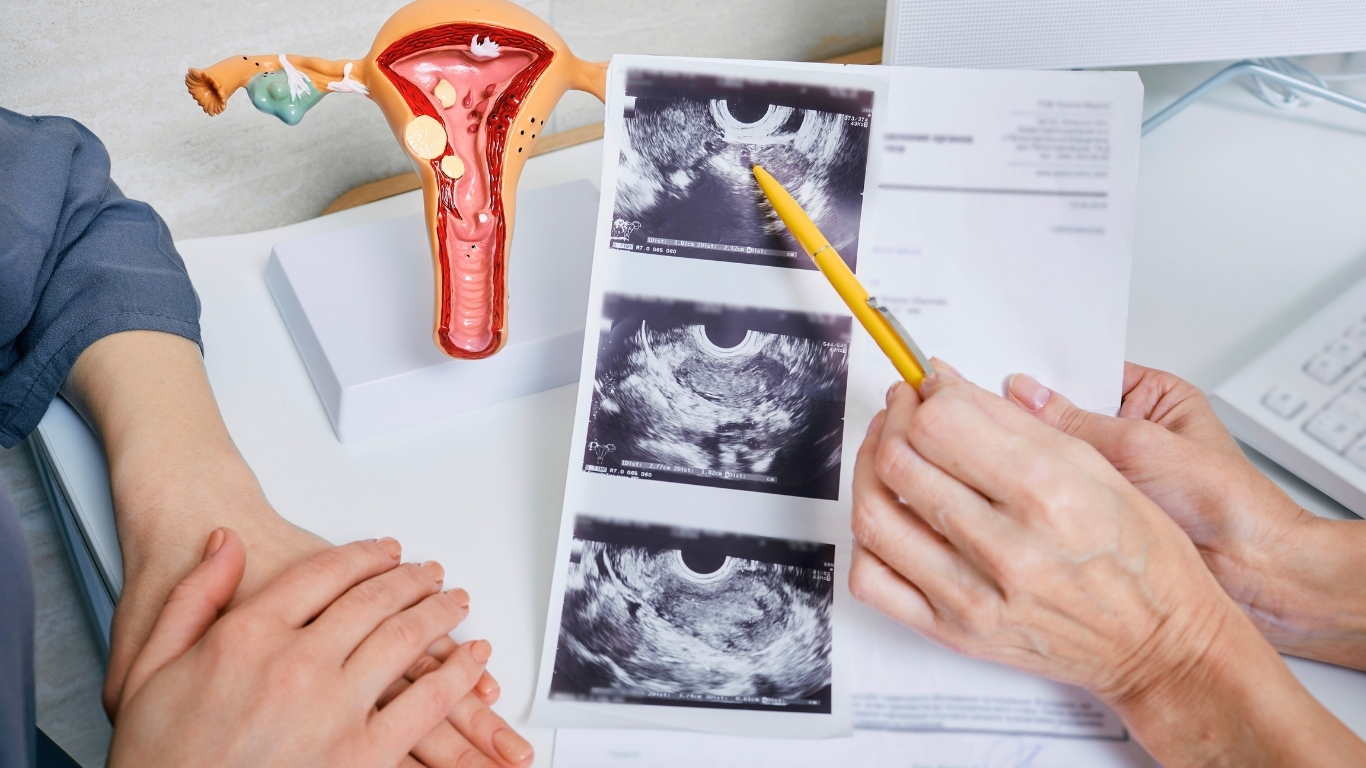
Fibroids are often found during a pelvic exam or ultrasound. Treatment depends on symptoms, the number and location of fibroids, your age, and whether pregnancy is a future goal. Some people need only monitoring. Others may benefit from medication or a procedure. Our guide to ovarian cysts and fibroids can help explain why a pelvic mass needs a precise diagnosis.
Endometriosis: When Pain Is the Main Clue
Endometriosis occurs when tissue similar to the lining of the uterus grows outside the uterus. It can affect the ovaries, fallopian tubes, tissue around the uterus, bowel, or bladder. The amount of visible disease does not always match the amount of pain, so severe symptoms deserve attention even when an earlier test was unrevealing.
Common endometriosis symptoms
Pain that is severe, recurrent, or tied to the menstrual cycle is a common endometriosis pattern. Symptoms can include:
- Period cramps that interfere with work, school, sleep, or daily activities
- Pelvic pain between periods
- Pain during or after sex
- Pain with bowel movements or urination, especially around a period
- Bloating, diarrhea, constipation, or nausea that follows the cycle
- Difficulty becoming pregnant
An OBGYN may start with your symptom history, a pelvic exam, and imaging. Ultrasound can identify some related findings, such as an ovarian endometrioma, but it cannot rule out every case of endometriosis. Laparoscopy may be considered when it will change management or when surgical treatment is needed. Treatment can include pain relief, hormonal medication, fertility-focused care, or surgery based on your symptoms and goals. For a related condition that can also cause painful or heavy periods, see our guide to endometriosis vs adenomyosis.
PCOS: A Hormonal Condition That Affects Ovulation
PCOS is a hormonal condition that can affect ovulation, menstrual cycles, androgen levels, and metabolic health. Despite the name, PCOS does not mean that every patient has ovarian cysts, and ovarian cysts alone do not diagnose PCOS. The small follicles that may be seen on an ultrasound are not the same thing as a single ovarian cyst.
Common PCOS symptoms
Irregular or skipped periods are a common PCOS sign because ovulation may not happen regularly. Other possible signs include:
- Acne or oily skin
- Excess facial or body hair
- Thinning scalp hair
- Weight changes or difficulty with weight management
- Darkened areas of skin, especially in body folds
- Difficulty becoming pregnant because ovulation is irregular
An OBGYN diagnoses PCOS by looking at the whole picture. That can include cycle history, physical symptoms, hormone testing, metabolic screening, and sometimes an ultrasound. Other conditions can cause similar symptoms, so a clinician may rule out other explanations before confirming PCOS. Management may include cycle regulation, acne or hair-growth treatment, insulin-resistance care, and fertility support when pregnancy is a goal. Read more about PCOS and irregular periods if missed or unpredictable cycles are your main concern.
Fibroids vs PCOS: What Is the Difference?
The main difference between fibroids and PCOS is where the problem starts. Fibroids are physical growths in or on the uterus, while PCOS is a hormonal condition that can disrupt ovulation. Fibroids more often point to heavy bleeding and pressure. PCOS more often points to irregular or missed periods, acne, excess hair growth, or trouble ovulating.
The two conditions can both affect fertility, but for different reasons. A fibroid may matter when its size or location affects the uterine cavity. PCOS may make conception harder because ovulation is unpredictable. The right treatment depends on the actual cause and your plans for pregnancy, so it is not useful to treat these conditions as interchangeable.
PCOS and Fibroids: Can You Have Both?
Yes, it is possible to have PCOS and fibroids at the same time. Having one does not prove that it caused the other, and a person can have overlapping symptoms from both. An OBGYN may investigate both conditions when irregular cycles occur alongside heavy bleeding, pelvic pressure, or an enlarged uterus on examination or imaging.
This distinction changes the care plan. Medication that helps regulate cycles may be useful for PCOS-related irregular bleeding, while fibroids may need separate monitoring or treatment if they cause anemia, pain, pressure, or fertility concerns. Mention every symptom at your visit, not only the symptom that feels most disruptive.
Fibroids vs Endometriosis: How Symptoms Differ
Fibroids and endometriosis can both cause heavy periods and fertility concerns, but the symptom pattern is often different. Fibroids are more likely to cause a feeling of pressure, frequent urination, constipation, or visibly heavy and prolonged bleeding. Endometriosis is more likely to cause severe menstrual pain, pain with sex, or bowel and bladder pain that worsens around a period.
There is still overlap. A patient can have fibroids with painful periods, and a patient can have endometriosis with heavy bleeding. In some cases, both conditions are present. Imaging may identify fibroids, but endometriosis can require a broader discussion about symptoms and possible next steps. Do not assume a fibroid found on an ultrasound explains every symptom.
Are Myomas and Fibroids the Same Thing?
Yes. Myoma, leiomyoma, and uterine fibroid are terms commonly used for the same noncancerous muscle growth of the uterus. You may see “myoma” on an ultrasound report or hear “fibroid” during an office visit.
The word on the report matters less than the details that follow: the number of fibroids, their size, their location, whether they distort the uterine cavity, and whether they are likely connected to your symptoms. Ask your OBGYN to walk through those details in plain language.
Getting the Right Diagnosis
The right diagnosis starts with a full symptom story, not a guess based on one Google search. Tell your OBGYN when pain occurs, how long bleeding lasts, how often you change pads or tampons, whether cycles are missed, and whether symptoms affect sex, bowel movements, urination, or fertility.
At East Coast OBGYN, our team may use a detailed medical history, pelvic exam, ultrasound, hormone testing, and other studies when needed. The goal is to separate conditions that look similar on the surface and build a plan around your symptoms and health goals. Visit our Brooklyn OBGYN location to discuss a gynecologic concern with our team.
Seek prompt medical care for sudden severe pelvic pain, fainting, fever with pelvic symptoms, or bleeding that feels unmanageable. If you are pregnant or trying to conceive, bring that up early because it can affect which tests and treatments make sense. Our article on signs that you should see a gynecologist sooner can help you decide when a routine concern needs an appointment.
Frequently Asked Questions
Here are direct answers to common questions about endometriosis vs fibroids vs PCOS. They can help you prepare for an appointment, but they cannot replace an evaluation by a qualified clinician.
Can PCOS cause fibroids?
PCOS does not directly cause fibroids. Both conditions can occur in the same person, and both are influenced by hormones in different ways. An OBGYN can evaluate the symptoms and testing results instead of assuming one condition explains the other.
What is the difference between PCOS and fibroids?
PCOS is a hormonal condition that often affects ovulation and menstrual regularity. Fibroids are growths in or on the uterus that may cause heavy bleeding, pressure, or urinary symptoms. The diagnosis and treatment approach for each is different.
Can you have fibroids and PCOS at the same time?
Yes. It is possible to have fibroids and PCOS together. A clinician may evaluate for both when irregular cycles occur with heavy bleeding, pelvic pressure, or ultrasound findings.
What is the difference between fibroids and endometriosis?
Fibroids are noncancerous uterine growths. Endometriosis involves tissue similar to uterine lining growing outside the uterus. Fibroids often cause heavy bleeding and pressure, while endometriosis more often causes severe pelvic pain, painful periods, or pain during sex.
What should I do if I have symptoms of fibroids, endometriosis, or PCOS?
Schedule a gynecologic visit and track your symptoms before you go. Note your cycle dates, bleeding pattern, pain triggers, and any skin, hair, bowel, bladder, or fertility changes. For ongoing concerns, East Coast OBGYN provides gynecological care focused on finding the cause and discussing treatment options that fit your needs.