
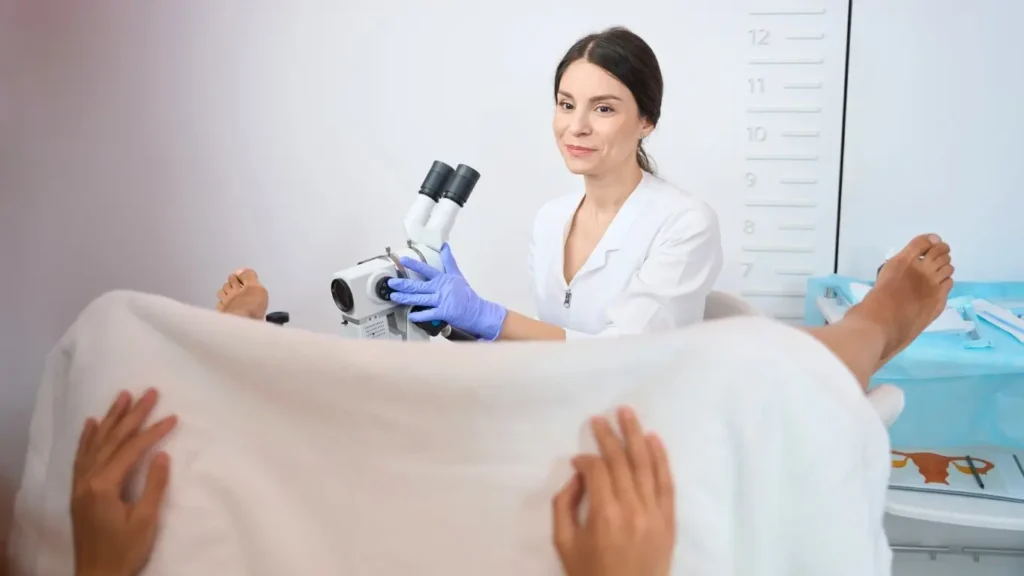
An endometrial biopsy is an office test that removes a small tissue sample from the lining of the uterus, called the endometrium. Your OBGYN may recommend it to evaluate abnormal bleeding, bleeding after menopause, a thickened uterine lining, or possible abnormal cells. The procedure is usually brief, but cramping and light bleeding afterward are common.
At East Coast OBGYN, patients from Brooklyn, Manhattan, Brighton Beach, Coney Island, Sheepshead Bay, and Gravesend can discuss symptoms, results, and next steps with an OBGYN. Learn more about gynecological care.
What is an endometrial biopsy?
An endometrial biopsy is a procedure that removes a small tissue sample from the lining of the uterus, called the endometrium. A lab examines the sample under a microscope to check for abnormal cells, hormone-related changes, infection, hyperplasia, or cancer.
The endometrium changes throughout the menstrual cycle. The biopsy is one part of the evaluation. Your symptoms, medical history, exam, and imaging help your OBGYN interpret the result.
Why might your OBGYN recommend an endometrial biopsy?
Your OBGYN may recommend an endometrial biopsy when bleeding needs a closer look. Common reasons include irregular or abnormal bleeding, bleeding between periods, very heavy or long periods, bleeding after menopause, a thickened uterine lining on ultrasound, or abnormal cells suspected from other testing.
The test may also be discussed when bleeding continues despite treatment. In general, sampling is often considered for abnormal uterine bleeding in patients 45 and older, and for younger patients with persistent bleeding or certain risk factors. Your OBGYN will recommend testing based on your individual situation.
How is an endometrial biopsy done?
An endometrial biopsy is commonly performed in an office or outpatient setting. The OBGYN uses a speculum to see the cervix, then passes a thin suction tube through the cervix and into the uterus to collect the endometrial tissue sample. You can usually rest briefly after the procedure and go home.
- You undress from the waist down and lie on an exam table with your feet in stirrups, similar to a pelvic exam.
- Your OBGYN places a speculum in the vagina so the cervix can be seen and may clean the cervix.
- A thin tube, also called a catheter or pipelle, passes through the cervix into the uterus.
- Gentle suction collects a small amount of tissue from the uterine lining.
- The sample goes to a lab, where a pathologist examines it under a microscope.
- The instruments are removed. You may use a pad for spotting and rest for a few minutes before leaving.
| Step | What happens | What you may feel |
|---|---|---|
| Speculum | Holds the vagina open so the cervix can be seen | Pressure similar to a Pap or pelvic exam |
| Cervix preparation | The cervix is cleaned and may be stabilized | Pressure, a pinch, or cramping |
| Tissue sample | A thin tube collects lining tissue | Brief cramping that may be mild or strong |
| Afterward | Instruments are removed and a pad may be used | Cramping or light spotting |
Is an endometrial biopsy painful?
Pain varies from person to person. Some patients feel pressure or menstrual-like cramps that pass quickly, while others feel stronger pain during the tissue-sample step. The more intense part is often brief, but it should not be described as painless.
If you are worried about pain, anxiety, prior pelvic trauma, severe cramps, cervical sensitivity, or difficult pelvic exams, tell your OBGYN before the appointment. Ask which options are appropriate, such as ibuprofen if safe for you, acetaminophen, or local options if available. You can request a pause or stop.
What bleeding is normal after an endometrial biopsy?
Light spotting or bleeding and mild cramping for a few days can be normal after an endometrial biopsy. Use pads rather than tampons until your OBGYN says otherwise, and follow the specific instructions you receive about sex, douching, exercise, heavy lifting, baths, and swimming.
Call your OBGYN promptly if: bleeding is heavy enough to soak a pad every 1 to 2 hours, bleeding lasts longer than your instructions say, pain is worsening instead of improving, you develop fever or chills, or you notice foul-smelling discharge.
If you are unsure whether a symptom is expected, call the office rather than waiting for follow-up.
Can you go back to work or drive after an endometrial biopsy?
Many patients go home shortly after an office biopsy and can return to usual activities when they feel ready. If no sedative is used, many patients can drive themselves, but you should follow your OBGYN’s instructions. If a sedative is used, arrange a ride home and avoid driving that day.
Planning a lighter day may help if cramping, spotting, anxiety, or fatigue occur. Bring a pad and wear comfortable clothing.
What does an endometrial biopsy test for?
An endometrial biopsy tests the uterine lining for abnormal cells and patterns that may help explain bleeding. The sample may show endometrial hyperplasia, hormone-related lining changes, inflammation or infection, atypia or EIN when confirmed by pathology, or endometrial cancer.
A biopsy samples the lining, so it does not fully evaluate every structural issue. Polyps or fibroids may contribute to bleeding, and ultrasound, hysteroscopy, D&C, or another test may be needed. Related conditions such as hormonal imbalance in women and fibroids, endometriosis, and PCOS may need their own evaluation.
What biopsy of the uterus results may mean
Biopsy of the uterus results may be normal, abnormal, or inconclusive. A normal result means no concerning abnormal cells were found in the sample, while an abnormal result identifies a finding your OBGYN will explain in relation to your symptoms and medical history. An inconclusive sample may require more testing.
| Result wording | Plain-English meaning | Possible next step |
|---|---|---|
| Benign / normal | No concerning abnormal cells were found in the sample | Your OBGYN explains whether symptoms still need follow-up |
| Proliferative or atrophic endometrium | Hormone-related patterns that may be normal depending on age and cycle stage | Review the result with your OBGYN in context |
| Polyp or fibroid-related finding | A benign growth may be contributing to bleeding | Imaging, hysteroscopy, or treatment discussion may follow |
| Hyperplasia | The uterine lining is thicker or more active than expected | Monitoring, medication, repeat sampling, or specialist care may be discussed |
| Atypia / EIN | Precancerous-type cell changes may be present | Prompt OBGYN or gynecologic oncology follow-up may be needed |
| Carcinoma | Cancer cells were found | Referral and treatment planning are needed |
| Insufficient / inconclusive sample | The lab could not fully interpret the tissue | Repeat biopsy, hysteroscopy, D&C, or imaging may be discussed |
Your OBGYN will explain what the finding means for you, whether more evaluation is needed, and when you can expect to discuss the result.
What if your biopsy is normal but bleeding continues?
A normal biopsy can be reassuring, but persistent or recurrent bleeding should still be reported. Because an office biopsy samples the lining rather than viewing the entire uterine cavity, it may not detect every focal issue, such as a polyp.
Depending on your symptoms and previous testing, the next step may include ultrasound, sonohysterography, hysteroscopy, D&C, medication, or referral. Follow-up is particularly important after menopause.
Endometrial biopsy in Brooklyn and Manhattan
East Coast OBGYN evaluates abnormal bleeding and uterine health concerns for patients in Brooklyn and Manhattan, including Brighton Beach, Coney Island, Sheepshead Bay, and Gravesend. Dr. Mark Vaynkhadler and the care team can discuss your symptoms, why testing may be recommended, and what questions to bring to your visit.
If you have abnormal bleeding, bleeding after menopause, or questions about a recommended endometrial biopsy, East Coast OBGYN can help you understand your next steps. Schedule a gynecological care visit or contact East Coast OBGYN to speak with an OBGYN. You can also plan an annual gynecological exam in Brooklyn when routine care is due.
Frequently asked questions about endometrial biopsy
What is an endometrial biopsy?
An endometrial biopsy removes a small tissue sample from the uterine lining. A lab examines it for abnormal cells, hormone-related changes, infection or inflammation, hyperplasia, precancerous changes, or cancer, then your OBGYN explains the finding in context.
How is an endometrial biopsy done?
Your OBGYN uses a speculum to see the cervix, cleans the area, and passes a thin tube through the cervix into the uterus. Gentle suction collects a small tissue sample, which goes to a lab for review.
Is an endometrial biopsy painful?
Pain varies. Some people feel brief pressure or menstrual-like cramping, while others feel stronger pain during sampling. Tell your OBGYN about pain concerns, anxiety, trauma history, or difficult exams beforehand so you can discuss appropriate comfort and pain-control options.
How much bleeding is normal after an endometrial biopsy?
Light spotting or bleeding for a few days can be normal after an endometrial biopsy. Call your OBGYN for heavy bleeding, bleeding that lasts longer than instructed, fever, chills, foul-smelling discharge, or pelvic pain that is severe or worsening.
What do biopsy of the uterus results mean?
Results may be normal, benign, inconclusive, or show findings such as hyperplasia, atypia or EIN, infection, or cancer. Your OBGYN explains what the result means based on your symptoms, medical history, exam, and whether more testing is needed.