

What is a Group B Strep test in pregnancy? A Group B Strep (GBS) test is a routine prenatal swab. Your doctor does it between 36 and 37 weeks of pregnancy. It checks for a common bacteria called Streptococcus agalactiae in your lower vagina and rectum. About 1 in 4 healthy women carry this bacteria without symptoms. If you test positive, your doctor gives you IV antibiotics during labor. This medicine protects your baby during birth.
What Is Group B Streptococcus?
Group B Streptococcus (GBS) is a type of bacteria. It lives naturally in the digestive tract and the vagina. In fact, about one in four healthy women carry this bacteria. In adults, these bacteria simply live on the body surface. They do not cause disease. You will not have itching, unusual discharge, pain, or fever.Common Myths About GBS
GBS is not a sexually transmitted disease (STD). You did not get it from sex. You cannot pass it back and forth with a partner.
GBS is not caused by poor hygiene. Bathing habits and diet do not change it.
Bacteria levels change naturally over time. You can test positive in one pregnancy and negative in the next.
Differences Between Group A and Group B Strep
Many people mix up Group B Strep with strep throat. They have similar names, but they are very different:| Feature | Group A Strep (GAS) | Group B Strep (GBS) |
|---|---|---|
| Body Location | Throat and skin | Digestive tract and vagina |
| Common Illness | Strep throat, scarlet fever | No symptoms in healthy adults |
| How It Spreads | Coughs and shared cups | Passes to baby during vaginal birth |
| Adult Symptoms | Fever and bad sore throat | None |
| In Pregnancy | Treated only if sick | Tested at 36-37 weeks to protect baby |
Why GBS Testing Protects Your Baby
GBS does not hurt healthy adults. However, newborn babies have new immune systems. They need extra protection. During a vaginal birth, a baby can touch these bacteria. This can also happen after your water breaks. In rare cases, this causes an infection called Early-Onset GBS Disease. This illness usually appears within 24 to 48 hours after birth. Without treatment, GBS can cause serious health issues for an infant:- Sepsis: A blood infection that causes fever, cold skin, or low energy.
- Pneumonia: A lung infection that makes breathing fast and hard.
- Meningitis: Swelling around the brain and spinal cord.
How the 36-Week Swab Test Works
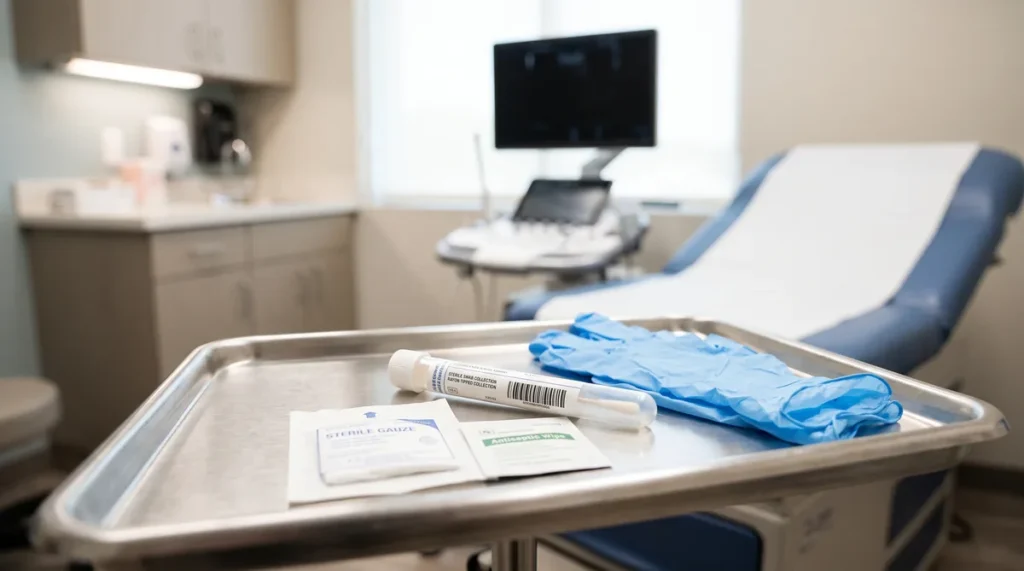 ACOG guidelines suggest testing between 36 weeks 0 days and 37 weeks 6 days of pregnancy.
Testing in this window gives the most accurate result. The test result stays accurate for about five weeks. Testing earlier is not helpful because bacteria levels change over time.
ACOG guidelines suggest testing between 36 weeks 0 days and 37 weeks 6 days of pregnancy.
Testing in this window gives the most accurate result. The test result stays accurate for about five weeks. Testing earlier is not helpful because bacteria levels change over time.
The Swab Step by Step
The swab test is very quick. It takes less than 10 seconds. Your doctor does not use a speculum:- You lie down on the exam table with a paper drape over your lap.
- Your doctor uses a sterile cotton swab to touch the lower part of your vagina.
- Your doctor uses the same swab, or a second swab, to gently touch just inside your rectum.
- The swab goes into a small tube and travels to the lab.
Does the Swab Hurt?
For most women, the swab does not hurt. It feels like a quick tickle, like a cotton swab on your arm. Late in pregnancy, your pelvic area has extra blood flow. You might also have hemorrhoids. Tell your doctor if the area feels sore before the test. At East Coast OBGYN, our doctors perform the swab quickly and gently to keep you comfortable.Why Oral Antibiotics Are Not Used Before Labor
Many patients ask: “Can I take antibiotic pills at 36 weeks to clear the bacteria before delivery?” The answer is no. Antibiotic pills taken before labor do not work for this goal. GBS lives naturally inside your gut. Oral medicine might clear the bacteria for a few days. However, the bacteria will return from your digestive tract within two to three weeks. Giving antibiotics through an IV during active labor is the only proven method. The medicine reaches your bloodstream fast. It enters the amniotic fluid within 30 minutes. This creates a clean shield while your baby moves through the birth canal.What Happens If You Test Positive During Labor?
Testing positive does not mean you need an early induction. It also does not mean you need a C-section. It simply means you have a clear plan for labor day.The Four-Hour Window
The goal is to receive your first dose of IV antibiotics at least four hours before birth. Research shows that four hours gives the best protection for your baby. Because of this timing, call your doctor right away when your water breaks. You should also call when regular contractions begin. Do not wait for hours at home.Moving Around the Room With an IV
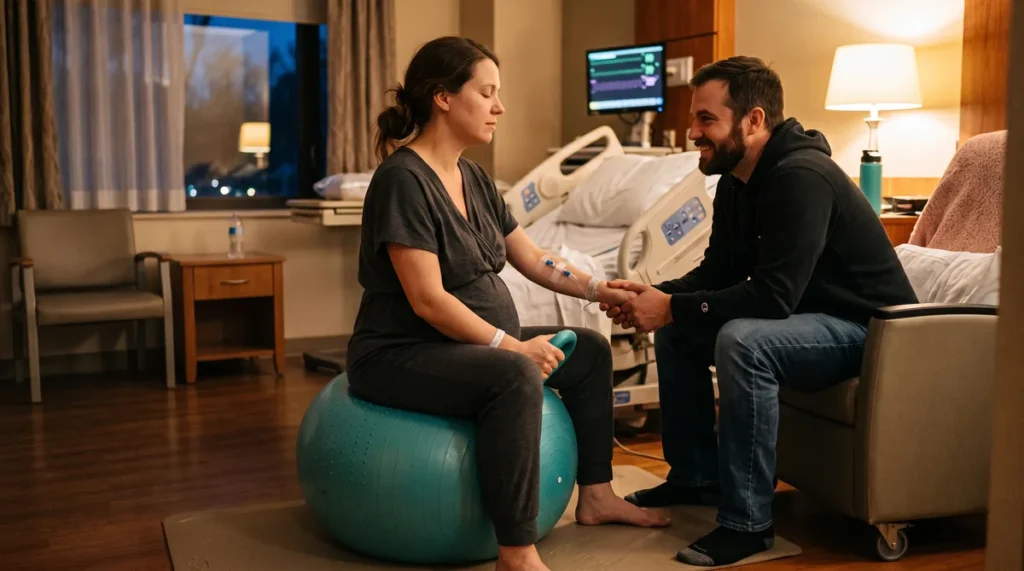 Many mothers want an active or unmedicated birth. They worry that an IV will trap them in bed.
You can still move around freely:
Many mothers want an active or unmedicated birth. They worry that an IV will trap them in bed.
You can still move around freely:
- The medicine drip takes only 15 to 30 minutes to complete.
- You get another dose every four hours until delivery.
- After each dose, the nurse unhooks the IV tube. They cap the small tube on your arm with a saline lock.
- Between doses, you can walk, bounce on a birth ball, shower, and change positions easily.
What If Your Water Breaks at Home?
If your water breaks before strong contractions start, stay calm. Call your doctor and head to the hospital. Even if delivery happens quickly, getting antibiotics as soon as you arrive still helps your baby.Antibiotic Options and Penicillin Allergies
Penicillin G is the main medicine used for GBS. It kills GBS bacteria while leaving other healthy bacteria alone. Ampicillin is another common option.What If You Are Allergic to Penicillin?
Penicillin allergies are very common. If you have an allergy, your doctor picks a safe alternative based on your medical history:| Allergy Risk Level | Past Reaction | Safe Antibiotic Used |
|---|---|---|
| Low Risk | Mild rash or upset stomach | Cefazolin: A safe, common alternative. |
| High Risk | Hives, throat swelling, or trouble breathing | Lab Testing: The lab tests your swab to find the best match. |
| High Risk (Bacteria Sensitive) | Lab confirms the medicine works | Clindamycin: Given through your IV every 8 hours. |
| High Risk (Bacteria Resistant) | Lab shows resistance to other drugs | Vancomycin: A strong, safe option given every 8 hours. |
Special Birth Scenarios
Planned C-Sections
If you have a planned C-section, you usually do not need GBS antibiotics. This rule applies as long as your water has not broken and labor has not started. Without labor or broken water, your baby does not pass through the birth canal. You will still receive standard surgical antibiotics right before surgery, as all C-section patients do.What If Labor Moves Faster Than Four Hours?
Sometimes labor moves very fast. If your baby arrives in less than four hours after your first dose, the hospital team follows simple safety steps:- Your baby stays in your room with you.
- Nurses check your baby’s temperature, breathing, heart rate, and feeding every four hours for two days.
- If your baby stays healthy and alert, no extra tests or nursery stays are needed.
Protecting Your Baby’s Gut Health
 Some parents wonder if labor antibiotics harm their baby’s gut bacteria. Any changes in gut bacteria are small and temporary:
- Breast milk has natural sugars and antibodies that quickly build healthy gut bacteria.
- Holding your baby skin-to-skin right after birth shares your healthy bacteria with your baby.
- Preventing a serious newborn infection is much more important than short-term gut changes.
Frequently Asked Questions
Can I decline the GBS test?
You have the right to make choices about your care. If you decline testing, your chart will say GBS status unknown. In that case, doctors recommend antibiotics during labor if you get a fever, deliver early, or your water breaks for more than 18 hours.Does GBS positive mean I need a C-section?
No. GBS does not change how you give birth. You can have a safe vaginal birth with GBS.What if GBS was found in my urine earlier in pregnancy?
If urine tests show GBS earlier in pregnancy, your doctor treats the bladder infection right away. You will automatically receive IV antibiotics during labor. You do not need the 36-week swab because treatment is already planned.Can Group B Strep cause miscarriage?
GBS in the vagina does not cause miscarriage or birth defects. Untreated urinary infections can sometimes trigger early contractions. This is why doctors test urine at early visits.Will I test positive in my next pregnancy?
Not always. GBS comes and goes. Testing positive now does not mean you will test positive next time. Doctors test again in every pregnancy.Can I swim or bathe after the swab?
Yes. The swab touches only outer tissue. It does not open the cervix or break the water bag. You can bathe, swim, and exercise normally until labor begins.Prenatal Care at East Coast OBGYN
Preparing for your baby’s birth should bring joy, not stress. At East Coast OBGYN, Dr. Mark Vaynkhadler, MD, FACOG, and our medical team support families through every step of pregnancy. We guide you from your first visit through delivery at top New York City hospitals.- Brooklyn Office: 2329 Nostrand Avenue, Suite 101, Brooklyn, NY 11210
- Manhattan Office: 315 Madison Avenue, Suite 702, New York, NY 10017
- Phone: (718) 769-6868