
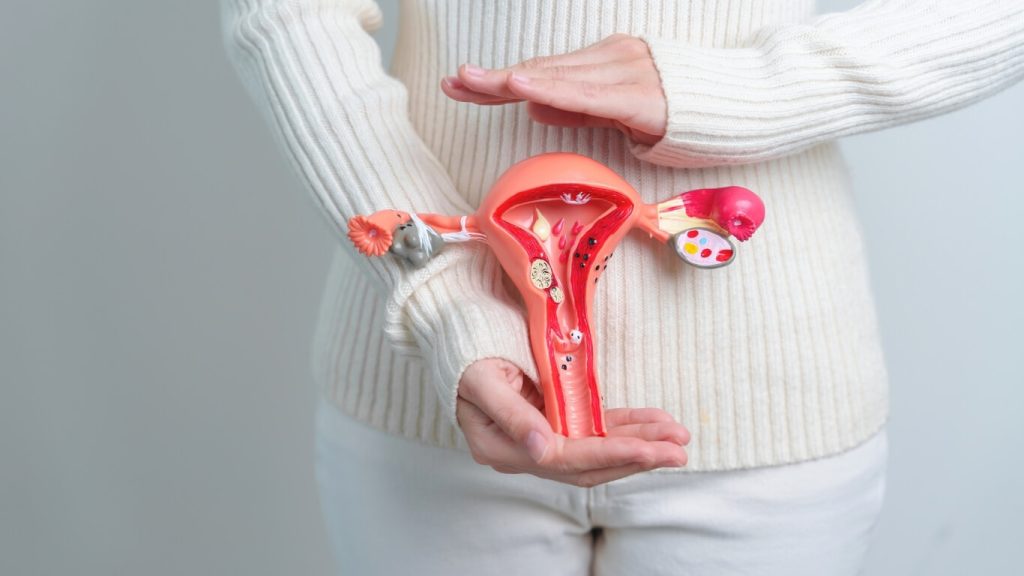
Ovarian cysts and uterine fibroids are both common and usually benign, but they are not the same. Ovarian cysts form on or inside an ovary, while fibroids grow from the muscle of the uterus. Symptoms can overlap, so an OBGYN exam and pelvic ultrasound are often needed to confirm the cause.
Most people land on the question of ovarian cysts vs fibroids for one of two reasons. Either the pelvic pain and bloating have gone on long enough that you started searching, or a radiology report came back with wording nobody explained to you. At East Coast OBGYN, patients in Brooklyn and Manhattan are evaluated for pelvic pain, pressure, abnormal bleeding, and imaging results that mention cysts, fibroids, or an adnexal mass.
Ovarian cysts vs fibroids: the key difference
The key difference is location and composition. An ovarian cyst is a fluid-filled sac on or inside an ovary. A uterine fibroid is a solid growth of muscle and fibrous tissue in the wall of the uterus. Cysts often resolve on their own. Fibroids usually do not.
| Feature | Ovarian cyst | Uterine fibroid |
|---|---|---|
| Where it forms | On or inside an ovary | In, on, or attached to the uterus |
| What it is | Usually a fluid-filled sac, sometimes a benign tumor-like cyst | Solid growth from uterine muscle and fibrous tissue |
| Common pattern | Often related to ovulation and may resolve without treatment | Often grows slowly; symptoms depend on size and location |
| Common symptoms | One-sided pelvic pain, bloating, sudden pain with rupture or torsion | Heavy bleeding, pressure, frequent urination, constipation |
| Diagnosis | Pelvic exam plus ultrasound; sometimes MRI or blood tests | Pelvic exam plus ultrasound; sometimes MRI or hysteroscopy |
| Treatment | Watchful waiting, pain control, hormonal suppression, cystectomy if needed | Medication, hormonal IUD, myomectomy, UAE, hysterectomy in selected cases |
Two other terms show up in reports and get treated as if they mean something different. Leiomyoma and myoma are both just fibroid. Same thing, different vocabulary.
Can you have ovarian cysts and fibroids at the same time?
Yes. The ovaries and the uterus are separate organs, so a cyst on an ovary and a fibroid in the uterus can exist at the same time. Having both is common enough that we see it regularly on pelvic ultrasound, and it makes symptoms considerably harder to sort out.
Having both does not mean one caused the other. There is no evidence that fibroids produce ovarian cysts or the reverse. What tends to happen instead is a muddled clinical picture: heavy periods from a submucosal fibroid, and separately, a functional cyst producing one-sided pain that month.
The work in that situation is attribution. Which finding explains which symptom? A 2 cm functional cyst is not the reason for six months of flooding periods, and a 7 cm fibroid is not the reason for the sudden stab of pain you felt on day 14. Sorting that out is what changes the treatment plan, because treating the wrong finding leaves you with the same symptoms and a new set of side effects.
Symptoms that can overlap
Pelvic pain, pressure or fullness, bloating, low back pain, pain during sex, urinary frequency, and constipation can all come from either condition. That overlap is why symptoms alone rarely settle the question. Timing in your cycle, bleeding pattern, exam findings, and imaging appearance carry far more diagnostic weight.
The bowel and bladder symptoms are the ones that send people down the wrong path. Bloating and constipation get worked up as IBS. Urinary frequency gets treated as a UTI, sometimes twice, before anyone orders a pelvic ultrasound. Neither of those detours is unreasonable, since both conditions really are more common than a fibroid pressing on your bladder. But if the bloating is persistent, if it is worse over months rather than after meals, and if it comes with pelvic pressure, the pelvis deserves a look.
Symptoms alone usually cannot prove whether the cause is a cyst or a fibroid. Location, timing, bleeding pattern, imaging appearance, and exam findings are what actually narrow it down.
Symptoms that point more toward an ovarian cyst
One-sided pelvic pain points more toward an ovarian cyst, especially when it comes and goes, arrives suddenly and sharply, or tracks with ovulation. Sudden severe pain with nausea or vomiting needs emergency evaluation for torsion or rupture. Larger cysts can also cause bloating and a sense of fullness on one side.
The pattern that suggests a functional cyst is cyclical: pain around mid-cycle or in the second half of the cycle, then quiet for a few weeks, then back. Most ovarian cysts are benign and many go away without treatment. Learn more about what follow-up may involve.
Endometriomas behave differently. If you also have painful periods, pain with bowel movements during your period, or a history of endometriosis, an ovarian cyst in that context is more likely to be an endometrioma than a follicular cyst. For more detail on what each type feels like, see our guide to ovarian cyst symptoms and red flags.
Symptoms that point more toward fibroids
Heavy or prolonged periods point more toward fibroids, particularly alongside clots, fatigue, or anemia. Pressure symptoms are the other signature: frequent urination, constipation, a lower abdomen that looks or feels enlarged, and back or thigh pressure. Bleeding changes plus pressure is a classic fibroid pattern.
Location drives everything with fibroids, more than size does.
- Submucosal fibroids push into the uterine cavity. These are the small ones that cause outsized bleeding and the ones most associated with fertility problems.
- Intramural fibroids sit within the uterine wall. Depending on size, they cause bleeding, cramping, or bulk symptoms.
- Subserosal fibroids grow on the outer surface. More pressure and pain than bleeding.
- Pedunculated fibroids hang off a stalk. These are the ones that can look like an ovarian mass on imaging, which is exactly how a fibroid ends up being called a possible cyst.
A 1 cm submucosal fibroid can make you anemic. A 6 cm subserosal fibroid might do nothing except press on your bladder at night. Size on a report is not the same as severity.
Ovarian cysts vs fibroids: how an OBGYN tells the difference
We start with your symptom and menstrual history, then a pelvic exam, then transvaginal ultrasound. Ultrasound shows size, location, and whether a mass is fluid-filled, solid, or mixed. MRI is added when the anatomy is unclear or surgery is being planned. Blood tests are used selectively, not routinely.
Transvaginal ultrasound is first-line for a reason. It sits close to the pelvic organs, it shows the ovaries and the uterus in the same study, and it distinguishes fluid from solid tissue well.
What ultrasound is good at:
- Separating a simple fluid-filled cyst from a solid uterine mass
- Measuring and mapping fibroids by location
- Showing whether a cyst has septations, solid components, or debris inside it
- Adding blood flow information when torsion or an unusual mass is a concern
Where it runs out of room is anatomy that does not sit where it should. A pedunculated fibroid tucked beside the ovary can read as an adnexal mass. A large mass filling the pelvis can obscure where it originated. In those cases MRI answers the question ultrasound could not, and it also gives the surgeon a map before a myomectomy.
CA-125 deserves a plain explanation, because it causes more anxiety than almost any other test in gynecology. It is a blood marker that can rise with ovarian cancer, and it can also rise with endometriosis, fibroids, pelvic infection, pregnancy, and ordinary menstruation. A mildly elevated CA-125 in a premenopausal woman with an endometrioma is expected. It is not a yes or no cancer test, and it is used in selected situations, most often when a mass has concerning imaging features or when a patient is postmenopausal.
What “complex cyst,” “adnexal mass,” and “possible fibroid” mean
Adnexal means near the ovaries and fallopian tubes. Complex means the mass is not simple clear fluid on imaging, so it may contain septations, solid areas, or internal debris. Possible fibroid usually means a solid mass that is probably uterine, sometimes a pedunculated fibroid sitting close enough to an ovary to be ambiguous.
Complex does not mean cancer. It means the radiologist is describing what they see accurately: a hemorrhagic cyst that bled into itself is complex, an endometrioma is complex, a dermoid cyst with fat and calcification is complex. All of those are benign and all of them look busy on a screen.
The report language that should prompt a real conversation is different: rapid growth over serial scans, solid nodules with blood flow, a mass in someone who is postmenopausal, ascites, or a cyst that keeps enlarging rather than resolving. Those features change the pathway. They do not diagnose anything by themselves.
When you get a report you do not understand, ask two specific questions instead of the general one. Not “is it bad,” but: which features here are reassuring, and what would change your recommendation? Those two questions get you a clinically useful answer.
When pelvic pain is urgent
Sudden severe one-sided pelvic pain, pain with fever or vomiting, fainting, dizziness, or rapid breathing all need emergency care. Bleeding that soaks through a pad in an hour or leaves you weak needs same-day attention. Persistent bloating or early fullness, especially after menopause, needs a prompt appointment rather than watchful waiting.
| Symptom | Why it matters | What to do |
|---|---|---|
| Sudden severe one-sided pelvic pain | Possible ovarian torsion or cyst rupture | Seek emergency care now |
| Pain with fever or vomiting | Possible infection or complication | Seek urgent care |
| Fainting, dizziness, or rapid breathing | Possible internal bleeding | Emergency care now |
| Heavy bleeding soaking pads or causing weakness | Possible severe bleeding and anemia | Call your OBGYN or go to urgent care depending on severity |
| Persistent bloating or early fullness, especially after menopause | Needs evaluation, not reassurance | Schedule a prompt medical assessment |
Torsion is the one worth understanding in advance. A cyst can make an ovary heavy enough to twist on its own blood supply, and the pain arrives fast, on one side, often with vomiting. It is time-sensitive because blood flow to the ovary is at stake. If that describes what is happening right now, this article is not the right place to be.
Treatment options depend on the diagnosis and your goals

Treatment follows the diagnosis and what you want from your body over the next several years. Many cysts need only follow-up imaging. Fibroid care ranges from hormonal control of bleeding to myomectomy, uterine artery embolization, or hysterectomy. Fertility plans change the order in which options get considered.
If symptoms are mild or absent: watchful waiting with follow-up imaging. This is the most common plan for a simple cyst and for small fibroids that are not bleeding you dry.
If a cyst looks functional: repeat ultrasound after a cycle or two, pain management in the meantime, and hormonal contraception if cysts keep recurring and the pattern is disruptive.
If a cyst is large, persistent, or complex: cystectomy is the usual approach, removing the cyst while preserving the ovary when the anatomy allows. Certain imaging features prompt referral to a gynecologic oncologist for surgical planning, which is a precaution rather than a diagnosis.
If fibroids are causing heavy bleeding: hormonal options come first, including a levonorgestrel IUD, along with treatment for anemia. Medication can control bleeding well without touching the fibroid itself.
If fibroids distort the uterine cavity and you want to conceive: myomectomy becomes the conversation, since submucosal fibroids are the ones most likely to interfere with implantation.
If fibroid symptoms are severe and childbearing is complete: hysterectomy is definitive and ends both the bleeding and the pressure. It is one option among several, not the default.
If you want a minimally invasive fibroid option: uterine artery embolization shrinks fibroids by cutting their blood supply, with a fertility conversation attached, since data on pregnancy afterward is more limited than for myomectomy.
Related conditions that can mimic cysts and fibroids
Endometriosis, adenomyosis, and PCOS produce pelvic pain, heavy bleeding, and bloating that can resemble cysts or fibroids. Endometriomas are ovarian cysts caused by endometriosis, which is why the two conditions are so often discussed together. Imaging that looks normal does not always rule out superficial endometriosis, so symptoms still matter.
Current guidance on diagnosing endometriosis supports earlier clinical diagnosis and symptom-based evaluation rather than waiting for surgical confirmation. Transvaginal ultrasound is first-line when endometriosis is suspected, and MRI helps characterize deeper disease. See the guidance for more detail. If your pain has been dismissed because a scan came back clean, that shift matters for you.
Adenomyosis, where endometrial tissue grows into the uterine muscle, causes heavy painful periods and a bulky uterus that can be mistaken for fibroids on exam.
Preparing for your OBGYN appointment
Bring four things to the visit: a symptom log with pain location and cycle timing, your bleeding pattern from the last two months, prior ultrasound or MRI reports with dates and measurements, and a list of any hormones or contraception you use. Tell us your pregnancy plans too.
The measurements and dates matter more than people expect. A 4 cm cyst is a different conversation depending on whether it was 4 cm last month or 2 cm eight months ago. If a previous scan was done elsewhere, bring the actual report rather than a summary, since the descriptive language is the part we need.
Also worth writing down before you come in:
- How many pads or tampons you go through on your heaviest day, and whether you flood through them
- Which cycle days the pain lands on
- Bowel and bladder changes, including constipation and how often you get up at night
- Family history of fibroids, endometriosis, or ovarian and breast cancer
- Your questions about fertility and about preserving the ovary or uterus
If you are due anyway, folding this into an annual gynecological exam saves you a visit.
Ovarian cyst and fibroid care in Brooklyn and Manhattan
East Coast OBGYN evaluates pelvic pain, abnormal bleeding, pressure symptoms, and outside imaging reports at our Brooklyn and Manhattan offices. Dr. Mark Vaynkhadler, M.D., FACOG, reviews your history, performs the exam, and arranges ultrasound so you leave with a plan rather than another unanswered question.
If you already have a report mentioning a cyst, a fibroid, or an adnexal mass, bring it in. A second read with your symptoms in front of us often resolves the ambiguity without any additional testing. Learn more about gynecological care in Brooklyn and Manhattan, or request an appointment.
Frequently asked questions
Are ovarian cysts and fibroids the same thing?
No. An ovarian cyst is a fluid-filled sac on an ovary. A fibroid is a solid muscle growth in the uterus. Different organ, different tissue, different treatment. Both are usually benign.
Can you have ovarian cysts and fibroids at the same time?
Yes, and it happens often. The ovaries and uterus are separate organs, so one does not cause the other. Your OBGYN’s job is matching each symptom to the right finding.
How do I know if pain is from a cyst or a fibroid?
You usually cannot tell from symptoms alone. One-sided sharp pain leans toward a cyst, heavy bleeding with pressure leans toward fibroids, and a pelvic ultrasound settles it in most cases.
Can ovarian cysts or fibroids affect fertility?
Sometimes. Submucosal fibroids that distort the uterine cavity are the most likely to interfere. Endometriomas and repeated ovarian surgery can affect ovarian reserve. Most small cysts and fibroids do not.
When should I see an OBGYN for cysts or fibroids?
Book a visit for pelvic pain lasting more than a few weeks, periods that soak through protection, new pressure or bloating, or any imaging report mentioning a cyst, fibroid, or adnexal mass.