
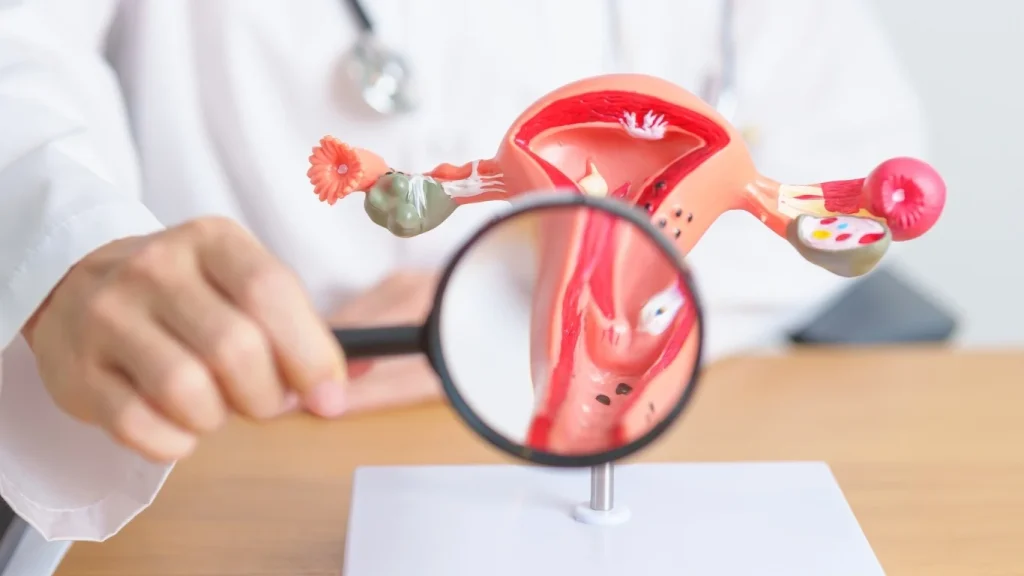
Severe period pain, heavy bleeding, pelvic pressure, or pain with sex deserve a medical evaluation. Endometriosis and adenomyosis can cause many of the same symptoms, but they affect different parts of the uterus and pelvis. Some patients have both, which is one reason a careful review of symptoms, imaging, and fertility goals matters.
Short answer: Endometriosis happens when endometrial-like tissue grows outside the uterus. Adenomyosis happens when tissue similar to the uterine lining grows into the muscular wall of the uterus. Both can cause pelvic pain and painful periods, but adenomyosis more often causes very heavy bleeding, clots, pelvic pressure, and an enlarged uterus.
If you are trying to understand chronic pelvic pain alongside fibroids, PCOS, or other conditions, read our guide to common gynecological conditions, including fibroids and endometriosis.
Endometriosis vs. adenomyosis: The key difference is where the tissue grows
The main difference is location. The endometrium is the lining inside the uterus that thickens and sheds during a menstrual cycle. With endometriosis, tissue similar to that lining grows outside the uterus. With adenomyosis, similar tissue grows into the myometrium, the muscle wall of the uterus.
| Feature | Endometriosis | Adenomyosis |
|---|---|---|
| Where tissue grows | Outside the uterus, including the ovaries, fallopian tubes, pelvic lining, bowel, or bladder | Into the muscular wall of the uterus |
| Common pain pattern | Pelvic pain, pain with sex, bowel or bladder pain, ovulation pain, or cycle-related pain | Severe cramps, pelvic pressure, and heavy painful periods |
| Bleeding pattern | Painful periods and spotting can occur | Heavy or prolonged bleeding, clots, and anemia risk are more common |
| Uterus changes | The uterus may be normal in size, though scar tissue can affect pelvic organs | The uterus may feel enlarged, tender, or softer than usual |
| Fertility concerns | Inflammation, adhesions, or endometriomas may affect fertility | It may affect fertility and pregnancy for some patients |
| How diagnosis is approached | Symptoms, imaging, and sometimes laparoscopy with biopsy | Symptoms, pelvic exam, ultrasound, or MRI; pathology after hysterectomy is definitive |
Both conditions are hormone-sensitive and can flare around a menstrual period. That overlap is why a symptom list alone cannot confirm either diagnosis.
Symptoms that may point more toward endometriosis include pain outside your period
Endometriosis is more likely when pain is not limited to heavy bleeding. It may cause cramps before a period, deep pain with sex, pain with bowel movements or urination during a period, or pelvic pain around ovulation.
Other possible symptoms include bloating, nausea, fatigue, lower back pain, and difficulty conceiving. An ovarian endometrioma can also be a clue. No symptom pattern proves endometriosis on its own.
At your visit, note whether pain appears before bleeding starts, during ovulation, after sex, or when you use the bathroom. Timing helps clarify possible causes of chronic pelvic pain.
Symptoms that may point more toward adenomyosis include heavy bleeding and pelvic pressure
Adenomyosis is more strongly associated with very heavy or prolonged periods, clots, severe cramping, and a feeling of fullness or pressure low in the abdomen. Heavy bleeding can lead to iron deficiency anemia, which may cause fatigue, dizziness, shortness of breath, or low energy. The American Academy of Family Physicians identifies heavy menstrual bleeding as the most common symptom of adenomyosis.
Heavy bleeding clue: Heavy bleeding with clots, pelvic pressure, and an enlarged uterus can point toward adenomyosis, but fibroids and other uterine conditions can cause similar symptoms. An evaluation is needed to identify the cause.
Patients may describe bleeding that soaks through products faster than expected, longer periods, or bloating with pelvic pressure. Lower back pain, painful sex, urinary frequency, or constipation can also occur.
If your periods have changed, you have irregular bleeding, or you are passing clots, our article on what can cause irregular periods can help you prepare for a discussion with your OBGYN.
Yes, you can have endometriosis and adenomyosis at the same time
A patient can have both endometriosis and adenomyosis. When both are present, it may be difficult to separate which condition is causing a specific symptom because pelvic pain, painful periods, pain with sex, heavy bleeding, bowel symptoms, bladder pressure, and fertility concerns can overlap.
Can you have both? Yes. One diagnosis does not rule out the other. A patient who has adenomyosis on imaging may still need evaluation for endometriosis if symptoms, exam findings, or fertility concerns suggest disease outside the uterus.
This overlap can make it hard to tell which condition is causing pain. An evaluation connects symptoms, exam findings, and imaging.
These conditions are often missed because symptoms overlap with other gynecological problems
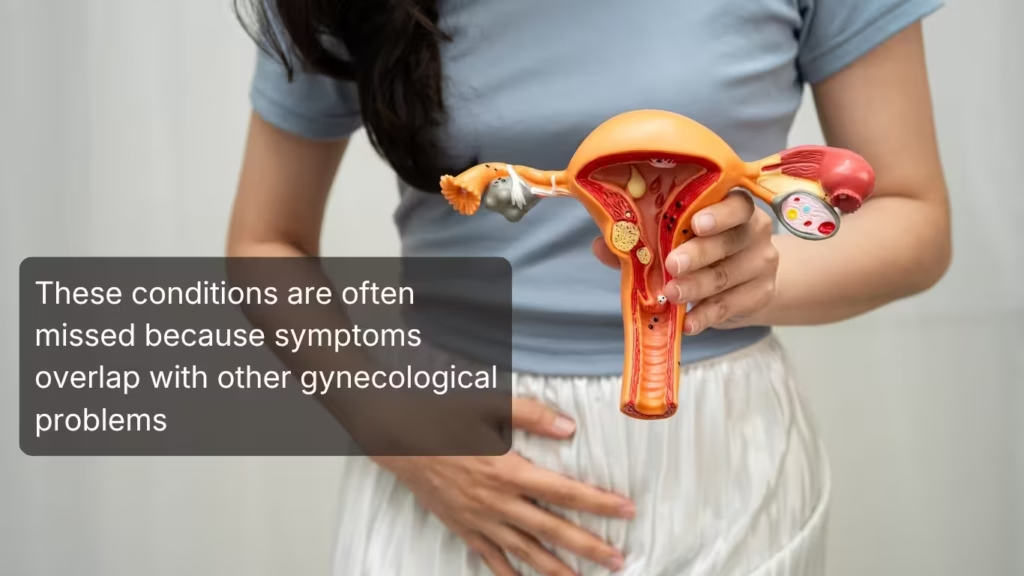
Endometriosis and adenomyosis can be missed because their symptoms are often described as “bad periods,” and heavy bleeding or pelvic pain can have several causes. Fibroids, ovarian cysts, abnormal uterine bleeding, bowel conditions, and urinary conditions can create a similar picture.
Routine imaging has limits. An ultrasound may identify fibroids, ovarian cysts, endometriomas, or signs of adenomyosis, but it may not show superficial endometriosis. A normal ultrasound does not automatically explain ongoing symptoms away.
Pain can also be hard to describe when it has been present for years. Missed work, avoided sex, canceled plans, and frequent use of over-the-counter medicine are useful details to share with an OBGYN.
Doctors use symptoms, an exam, imaging, and sometimes laparoscopy to tell the difference
Diagnosis usually begins with your symptom history and a pelvic exam. Your clinician may then recommend transvaginal ultrasound, MRI, or other testing based on what you report and what is found during the exam. Laparoscopy may be considered when endometriosis needs direct evaluation or treatment.
| Test or evaluation | What it can help show | Important limits |
|---|---|---|
| Symptom history | Pain timing, bleeding pattern, bowel or bladder symptoms, prior treatments, fertility goals | Symptoms overlap and cannot confirm a diagnosis alone |
| Pelvic exam | Tenderness, masses, or an enlarged uterus | A normal exam does not rule out disease |
| Transvaginal ultrasound | Fibroids, ovarian cysts, endometriomas, and signs of adenomyosis in some patients | It may miss superficial endometriosis or subtle adenomyosis |
| Pelvic MRI | Adenomyosis, endometriomas, and some deep endometriosis findings | It may still miss superficial disease |
| Laparoscopy | Direct visualization, biopsy, and possible treatment of endometriosis | It is a surgical procedure and is not always the first step |
| Pathology after hysterectomy | Definitive confirmation of adenomyosis in removed uterine tissue | It applies only if the uterus is removed |
Imaging clue: Ultrasound and MRI can help identify adenomyosis and some forms of endometriosis, but clear imaging does not always rule out superficial endometriosis. Testing is selected based on the whole clinical picture.
For adenomyosis, a pelvic exam, transvaginal ultrasound, and MRI may all contribute to diagnosis. Mayo Clinic notes that ultrasound and MRI can help detect signs of adenomyosis, while examining uterine tissue after hysterectomy is the only way to confirm it with certainty.
Track your symptoms before an OBGYN visit so your evaluation starts with clear details
A symptom diary can make an appointment more productive. Bring prior ultrasound, MRI, surgical, and pathology records. You do not need perfect notes. A few cycles of clear details can be helpful.
Before an OBGYN visit for suspected endometriosis or adenomyosis, track when pain happens, how heavy bleeding is, whether symptoms affect sex, bowel movements, urination, work, or fertility, and what treatments you have already tried. Bring prior imaging and surgical records if available.
Track:
- When pain occurs: before a period, during bleeding, around ovulation, after sex, with bowel movements, or with urination
- Where pain occurs: pelvis, lower back, rectal area, bladder area, abdomen, or legs
- Bleeding pattern: number of days, spotting, clots, flooding, pad or tampon changes, and bleeding between periods
- Daily impact: missed work, school, exercise, sleep, social events, or sex
- What you have tried: NSAIDs, heating pads, hormonal birth control, an IUD, pelvic floor therapy, or prior procedures
- Fertility history and goals: pregnancy history, time trying to conceive, IVF, or embryo transfer plans
- Possible anemia symptoms: fatigue, dizziness, shortness of breath, or low energy
If you need a general overview of normal cycle changes, see our menstrual cycle guide.
Treatment options depend on whether pain, bleeding, fertility, or uterine preservation matters most to you
Treatment depends on symptoms, imaging, medical history, prior treatment, and pregnancy plans. One patient may need bleeding control, while another may need a fertility-sparing plan or definitive treatment.
If pain relief is your main goal, medical treatment may be the first step
Pain management may include anti-inflammatory medicines when medically appropriate, hormonal birth control, progestin-based treatment, or other hormonal suppression options. Pelvic floor therapy may also be considered when pelvic floor muscle tension adds to pain with sex or pelvic exams.
If over-the-counter pain relief is not enough, tell your clinician exactly how often you need it and whether it changes your ability to work, sleep, or function. That information helps guide the next step. Do not increase medicine doses beyond labeled directions without medical advice.
If heavy bleeding is your main goal, treating bleeding and checking for anemia matters
Hormonal therapy and a levonorgestrel-releasing IUD may reduce bleeding and pain for some patients with adenomyosis. AAFP notes that levonorgestrel-releasing intrauterine systems may help reduce heavy menstrual bleeding and pain in patients who do not desire pregnancy.
Your clinician may also check for anemia and assess whether fibroids, polyps, thyroid concerns, or another cause contributes to heavy bleeding. Treatment should address both the bleeding and the impact it has on your daily life.
If preserving fertility is your main goal, treatment should be planned around pregnancy goals
Fertility goals can change how endometriosis and adenomyosis are managed. Endometriosis excision may be considered for selected patients, while adenomyosis treatment may focus on symptom control and uterine preservation. If you are trying to conceive, have had difficulty conceiving, or are preparing for IVF, tell your OBGYN early so fertility planning can be part of the discussion.
Specific medication, surgery, or IVF decisions need individualized guidance from your gynecologist and, when appropriate, a fertility specialist.
If you are not ready for hysterectomy, there may still be other ways to manage symptoms
Hysterectomy is the definitive treatment for adenomyosis because it removes the uterus where the disease is located. It is not always the first option, especially for patients who want to preserve fertility or prefer to try medical management first.
Treatment decision: Your plan depends on pain severity, bleeding, fertility goals, prior treatments, and whether you want to preserve the uterus. A hysterectomy can treat adenomyosis definitively, but endometriosis outside the uterus may need separate evaluation or treatment.
If symptoms are severe and childbearing is complete, surgery may be part of the conversation
For severe adenomyosis symptoms, hysterectomy may be discussed. Mayo Clinic lists it as an option when pain and heavy bleeding continue despite treatment. Recovery concerns, medical history, and possible endometriosis outside the uterus should be part of that discussion.
Schedule a pelvic pain or heavy bleeding evaluation when symptoms disrupt your life
Schedule a gynecological evaluation if period pain makes you miss work or school, bleeding is heavy or prolonged, you pass large clots, or pain occurs with sex, urination, bowel movements, or ovulation. It is also wise to book a visit if over-the-counter relief is not enough or if you are trying to conceive and have pelvic pain or heavy bleeding.
East Coast OBGYN provides gynecological care for patients in Brooklyn and Manhattan. Bring your questions, your symptom history, and any prior imaging. The visit should help you understand possible causes and discuss next steps that fit your goals.
Sudden severe pelvic pain, fainting, fever, possible pregnancy-related pain, or bleeding that soaks through pads rapidly may need urgent medical attention.
Frequently asked questions
Can adenomyosis be mistaken for endometriosis?
Yes. Both conditions can cause pelvic pain, painful periods, and pain with sex. Adenomyosis is more often linked with heavy bleeding, clots, and an enlarged uterus, but imaging and a clinical evaluation are often needed to sort out the cause.
Can you have endometriosis and adenomyosis at the same time?
Yes. Some patients have both conditions. When they occur together, pain, bleeding, bowel symptoms, bladder pressure, and fertility concerns may overlap, which can make it difficult to know which condition is causing a particular symptom.
Can ultrasound or MRI show endometriosis or adenomyosis?
Ultrasound and MRI can help identify adenomyosis, fibroids, endometriomas, and some deep endometriosis findings. They may miss superficial endometriosis, so normal imaging does not always explain ongoing pelvic pain.
Is hysterectomy the only treatment for adenomyosis?
Hysterectomy is the definitive treatment for adenomyosis, but it is not the only way to manage symptoms. Hormonal therapy, hormonal IUDs, pain control, and selected procedures may help, especially for patients who want to preserve fertility.
When should I see an OBGYN for severe period pain or heavy bleeding?
See an OBGYN if pain makes you miss work or school, bleeding is very heavy or prolonged, you pass large clots, over-the-counter pain relief is not enough, or you have pain with sex, urination, or bowel movements.