
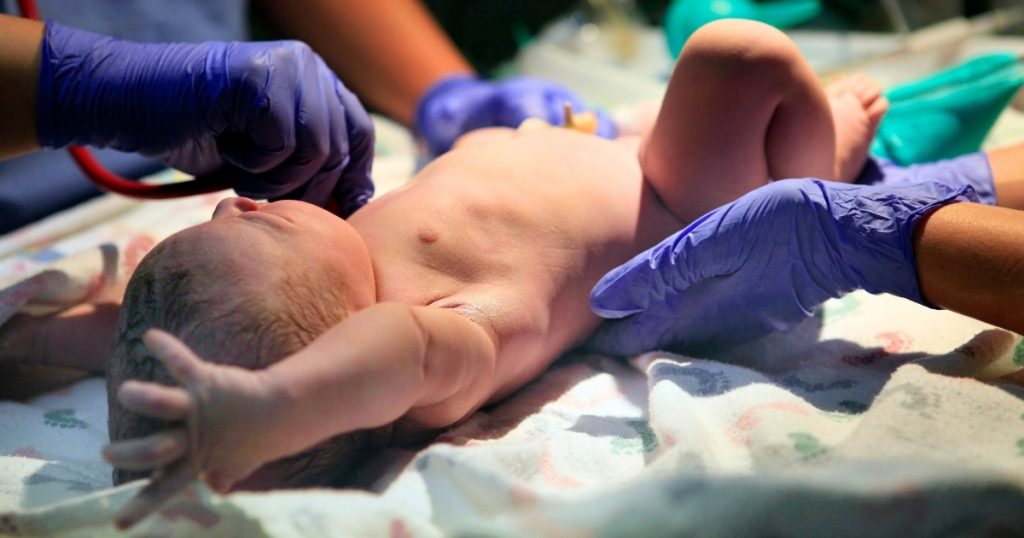
Clean a newborn circumcision at every diaper change during the first ten days. Use warm water rinses. Apply generous petroleum jelly barriers. Never scrub the healing glans with commercial baby wipes or washcloths. Raw mucosal tissue requires gravity water flow. Clean surrounding skin with soft cotton pads. Fasten diaper tabs loosely.
Parents across New York City bring their newborn sons to East Coast OBGYN for in-office newborn circumcision care in Brooklyn and Manhattan. Dr. Mark Vaynkhadler, MD completes the procedure in fully equipped surgical suites. Routine home hygiene shapes healing speed. It also protects your infant’s cosmetic outcome. Master these daily changing table steps. They keep your baby calm. They also prevent painful diaper friction.
How to Clean a Newborn Circumcision Wound Without Causing Pain
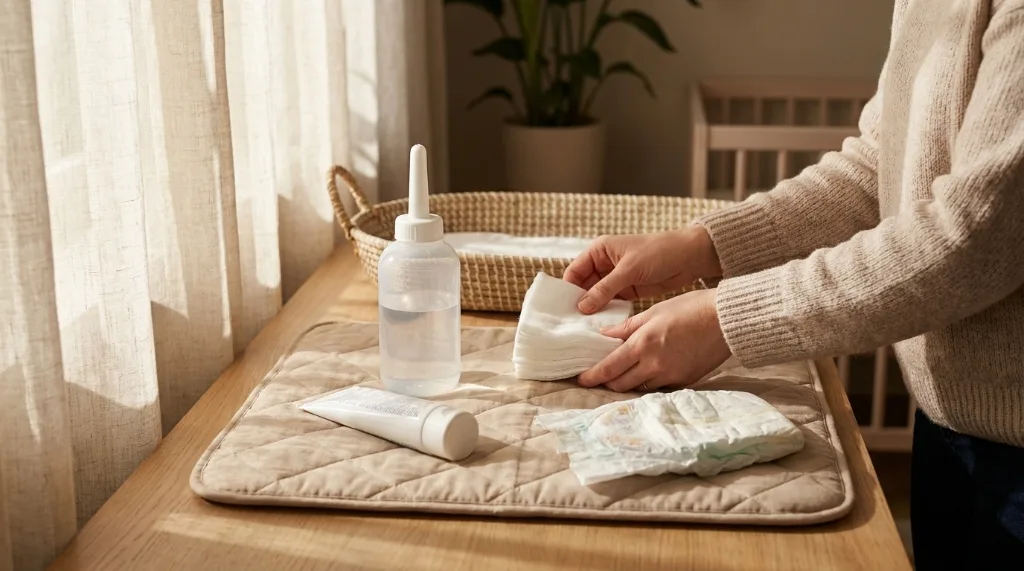
Clean a newborn circumcision wound at every diaper change. Trickle warm water over the penis. Blot surrounding skin dry with cotton. Apply a nickel-sized dollop of white petroleum jelly directly onto the glans. Never wipe raw surgical margins. Fasten the diaper loosely. This stops painful friction against fresh tissue.
A fresh circumcision heals through direct contact protection. Urine, friction, and dry fabrics irritate the cut edge. Follow these five steps during every diaper change to protect raw skin cells.
Step 1: Wash Your Hands and Prep Clean Changing Supplies
Begin every diaper change with strict hand hygiene. Scrub your hands with warm water and soap for twenty seconds before touching your baby. Set out all supplies within arm’s reach before unfastening the diaper:
- One 4-ounce peri-bottle filled with lukewarm tap water (98°F to 100°F).
- A clean tube of 100% white petroleum jelly. Squeeze tubes prevent bacterial contamination common in open tubs.
- Four sterile cotton pads or dry cotton balls.
- A clean newborn diaper.
Step 2: Flush the Wound With Gentle Warm Water Irrigation
Unfasten the dirty diaper. Lower it beneath your infant’s hips. Hold the squeeze bottle two inches above the penis. Direct a soft stream of lukewarm water across the glans and incision line. The flowing water rinses away urine droplets and loose fibers.
Gravity lifts debris without physical contact. Never direct high-pressure squirts at the tip. If urine dried onto the skin, repeat the warm water rinse. Stop when the surface looks clean.
Step 3: Pat the Surrounding Groin Dry Without Rubbing the Glans
Trapped diaper moisture macerates skin. It also weakens the surgical clot. Take a dry cotton pad. Press it against the thighs, scrotum, and lower abdomen. Blot these surrounding areas dry.
Do not touch or blot the head of the penis or the incision line. Dry fibers snag fresh fibrin clots. This causes sudden bleeding. Allow the penis to air dry for thirty seconds on the changing mat.
Step 4: Apply a Generous Petroleum Jelly Shield Over the Incision
Fresh surgical tissue sticks instantly to dry diaper plastic. Petroleum jelly forms an impenetrable physical shield against diaper liners and acidic urine. Squeeze a nickel-sized mound of 100% white petroleum jelly onto your clean fingertip. Place it directly onto the tip of the penis.
Coat the entire glans, the incision line, and the shaft. Place a second quarter-sized dollop of petroleum jelly on the clean diaper liner. Position it directly over the penis. This dual-barrier method prevents adhesion when your baby kicks his legs.
Step 5: Fasten the Diaper With Inward Waistband Fold Geometry
Diaper waistbands press down on the healing surgical site. Take the front waistband of the clean diaper. Fold it inward toward the baby’s belly button by one inch.
This inward fold drops the top edge of the diaper below the penis. It also keeps the umbilical cord stump dry. Secure the adhesive tabs loosely. Leave space across the waistband. Slide two adult fingers flat between the diaper and your baby’s belly. This confirms a comfortable fit. A loose fit prevents compression and contains daily urine.
How to Clean Poop Off a Fresh Circumcision Safely: The Gravity Rinse Protocol
Clean bowel movements off a fresh circumcision immediately. Flush the area with steady streams of lukewarm water from a squeeze bottle. Keep wipes away from raw surgical skin. Use wet wipes only on outer thighs and buttocks. Wipe strictly front-to-back. Reapply thick petroleum jelly immediately after rinsing.
Bowel movements cause intense anxiety for new parents. Newborn stool contains billions of active bacteria and digestive enzymes. These agents inflame open wounds. Immediate decontamination protects the incision from secondary infection.
Why Commercial Baby Wipes Burn Fresh Circumcision Tissue
Store-bought baby wipes cause immediate burning on fresh circumcision wounds. Even products labeled as “99% pure water” contain chemical preservatives. Manufacturers add phenoxyethanol, sodium benzoate, and ethylhexylglycerin to prevent mold inside the package. They also add citric acid buffers to maintain a shelf-life pH between 4.5 and 5.0.
Fresh glans tissue consists of delicate mucous membranes. Acidic buffers and chemical preservatives irritate this raw mucosal edge. They stimulate TRPV1 sensory nerve receptors instantly. Your baby screams from chemical burning, not physical touch. Commercial preservatives also cause acute contact dermatitis on denuded skin. The American Academy of Pediatrics directs parents to use plain lukewarm water. Avoid commercial wipes on open genital wounds.
The 4-Step Stool Decontamination Routine for Nursery Changing Tables
Follow this clean-up routine whenever stool touches your infant’s healing penis:
- Clear the Perimeter First: Unfasten the soiled diaper. Fold the front half downward under the buttocks. Take a moist cloth and clean stool off the thighs, scrotum, and perianal area. Wipe strictly front-to-back away from the penis.
- Irrigate Stool With Gravity Streams: Lift the baby’s legs by the ankles. Position your warm-water squeeze bottle two inches above the lower abdomen. Squeeze a steady stream of water downward across the penis. The stream carries liquid stool onto the soiled diaper below.
- Lift Stubborn Residue With Soaked Cotton: When sticky stool clings to petroleum jelly on the incision, soak a sterile cotton ball in warm water. Hold the wet cotton ball over the stool for fifteen seconds. Squeeze warm water over it to float the residue away. Never scrape or drag cotton across the raw glans.
- Rebuild the Protective Jelly Shield: Blot the surrounding scrotum and groin dry with clean gauze. Apply a fresh nickel-sized layer of petroleum jelly over the entire penis. Secure a clean diaper.
When Can I Bathe My Newborn After Circumcision? Sponge Bath vs. Tub Bath Timeline

Give your newborn sponge baths exclusively until the circumcision seals. Also wait until the umbilical cord stump detaches. This takes ten to fourteen days after delivery. Never submerge your baby in bath water during early recovery. Standing bath water softens healing incisions prematurely. It also exposes raw margins to household bacteria.
Bathing protects newborn hygiene while the surgical site recovers. Parents must balance clean skin against surgical moisture limits. Do this during the first two weeks of life.
Sponge Bath Protocol: How to Wash Your Baby Without Wetting the Healing Penis
Sponge baths clean your baby’s skin while keeping the groin dry:
- Warm the nursery to at least 75°F. This keeps your infant comfortable during the bath.
- Lay your baby on a dry towel atop a flat surface.
- Wrap his lower body in a warm blanket. This stops chills while you wash his face, scalp, and torso.
- Dip a soft washcloth into warm water mixed with mild, fragrance-free baby soap. Wring the cloth until damp.
- Wash the face, neck folds, chest, arms, and back. Rinse with a second damp cloth containing clear water. Pat each area dry immediately.
- Uncover the legs. Wash the thighs, feet, and buttocks. Stop short of the genital area.
- Complete the circumcision care at the very end of the bath. Clean the penis separately using your warm-water squeeze bottle and fresh petroleum jelly.
Coordinating the Umbilical Cord Stump Drop and Circumcision Healing
Newborn recovery requires managing two surgical sites at once: the drying umbilical cord stump and the healing circumcision wound. Both sites share an identical vulnerability: prolonged water exposure promotes bacterial growth.
The umbilical cord stump falls off naturally between Day 7 and Day 14. This process happens through dry tissue mummification. Submerging the stump in bath water rehydrates dead tissue. This invites bacterial growth and risks omphalitis. Submerging the penis dissolves the natural fibrin clot. It also washes away protective ointment barriers. Maintain strict sponge baths until your pediatrician confirms both sites healed completely.
Submersion Tub Baths: Safe Timing and Water Readiness Criteria
Transition your baby to a baby bathtub only when his body meets three clinical milestones:
- The umbilical cord stump fell off cleanly. The navel looks completely dry and closed.
- The circumcision incision sealed into smooth, dry, pink skin with zero raw margins.
- The yellow fibrin scab shed completely, or the Plastibell ring detached naturally.
Fill the baby tub with two inches of warm water (98°F to 100°F). Always test the water temperature on your inner wrist. Support your baby’s head and shoulders with one arm. Wash his body using mild, unscented soap. Rinse the healed penis with clean water from a cup. Never scrub the shaft. Lift your baby onto a warm towel and pat his entire body dry immediately after the bath.
| Bath Type | Recovery Phase | Submersion Allowed? | Target Anatomy Care | Soap Safety |
|---|---|---|---|---|
| Sponge Bath | Days 1 to 10 (Early Recovery) | No Submersion | Wash head, trunk, and limbs; keep penis and cord dry | Mild soap on body only; zero soap on penis |
| Shallow Basin Sponge | Days 10 to 14 (Late Recovery) | No Submersion | Spot-clean body folds; rinse groin with warm squirt bottle | Unscented soap on skin; clear water on genitals |
| Full Submersion Tub Bath | Day 14+ (Full Healing) | Yes (1 to 2 inches water) | Wash entire infant body in baby tub; rinse penis gently | Mild baby wash overall; rinse thoroughly with clear water |
Cleaning Baby Circumcision With Yellow Crust: Why You Must Never Scrub
Never scrub or wipe away the yellow crust on a healing circumcision between Day 3 and Day 7. This yellow film is normal fibrin granulation tissue. It shields healing capillaries and nerve endings. Scrubbing tears fragile microvessels. It triggers fresh bleeding and delays epithelial skin closure by several days.
Anxious parents often confuse healthy healing tissue with infection. Understanding this physiological process prevents injury. It gives parents peace of mind at the changing table.
Why You Must Never Wipe or Pick at Yellow Fibrin During Diaper Changes
During normal wound healing, white blood cells, platelets, and collagen create a protective layer of fibrin exudate over raw tissue. This layer appears as a soft, yellow-white coating that circles the coronal sulcus and glans.
Fibrin acts as the body’s natural biological shield. Underneath this soft coating, epithelial cells migrate across cut margins to build new skin. Do not wipe this area with a cloth. Never rub it with cotton or peel it off. Any friction tears delicate new blood vessels. The site will bleed immediately. This tears open healing skin and extends recovery time.
For complete photographic stage comparisons, day-by-day recovery milestones, and infection triage, review our clinical guide on circumcision healing stages and post-circumcision care.
How Soft Warm Water Soaks Loosen Dried Scabs Naturally
Allow yellow fibrin to dissolve and shed on its own timeline. Between Day 7 and Day 10, the underlying skin completes its epithelial barrier. The yellow film begins lifting along the edges.
Do not pull loose flakes. Squeeze warm water over the penis during diaper changes. Warm water softens dried crust edges naturally. Routine diaper movement and water rinses wash the flakes away. This happens naturally when the new skin underneath is ready. Coat the entire area with petroleum jelly at every diaper change. This habit keeps the scab soft and flexible.
Diaper Friction and Skin Adhesion: Preventing Stuck Gauze and Penile Bridges
Prevent diaper friction and foreskin adhesions by applying thick petroleum jelly barriers at every change. Perform gentle skin rollback starting on Day 7. If diaper fabric sticks to raw skin, soak the area with warm water until it releases naturally.
Healing skin edges adhere readily to surrounding surfaces. Active protection prevents painful dressing incidents and abnormal cosmetic scarring.
Emergency Warm Water Release for Diapers Stuck to Raw Flesh
When an ungreased diaper or dressing sticks to the raw glans, never pull or yank the fabric away. Pulling tears fresh skin. It reopens closed capillaries and triggers sudden pain.
Follow this gentle release routine:
- Stop Immediately: Hold the diaper still. Do not pull against resistance.
- Saturate With Warm Water: Soak a clean washcloth or sterile cotton ball in lukewarm water. Hold it directly over the stuck fabric for two to three minutes. Allow the water to soak completely through the diaper lining.
- Test the Edge: As fibers absorb water, the petroleum jelly underneath softens. The fabric slides off the glans smoothly without resistance.
- Inspect and Protect: Examine the tip for active bleeding. Apply a double-sized dollop of petroleum jelly over the site before fastening the new diaper.
Post-Bath Suprapubic Skin Rollback for Chubby Babies
Newborn boys with prominent suprapubic fat pads face a specific anatomical complication: inward penile retraction. When an infant has thick fat pads above the pubic bone, the penis shaft retracts inward toward the abdomen like a turtle into its shell.
When the cut foreskin edge retracts into moist fat rolls, raw skin edges press directly against the raw coronal groove. Over several days, these healing tissues can fuse together. This fusion creates abnormal skin adhesions or permanent penile bridges.
Dr. Mark Vaynkhadler advises parents of chubby infants to begin gentle rollback on Day 7 after the procedure:
- Wash your hands thoroughly.
- Place your index finger and middle finger on the lower abdomen directly above the base of the penis.
- Press downward into the fat pad. Slide your fingers slightly toward the baby’s tailbone.
- This pressure pops the penis shaft forward. It exposes the entire glans and the circular coronal groove behind it.
- Apply a ring of petroleum jelly into that circular groove.
- Perform this two-second check once daily during diaper changes until your pediatrician confirms complete healing at your follow-up visit.
When to Call Your Pediatrician: Normal Spotting vs. Urgent Clinical Signs
Contact your pediatrician immediately if your infant develops active bleeding larger than a quarter. Also call if you note absence of wet diapers for eight hours, spreading red borders along the shaft, or a rectal temperature of 100.4°F or higher. Light blood spots smaller than a dime are normal. Expect minor spots during the first 48 hours.
Home care requires vigilant monitoring. Distinguishing minor post-surgical oozing from urgent complications ensures fast medical care. Your baby receives timely evaluation.
Distinguishing Normal Fibrin Shedding Spots From Active Bleeding
A small speck of blood in the diaper is common during recovery. On Days 1 and 2, minor capillary oozing leaves nickel-sized pink spots on the diaper lining. Around Day 7, you may see tiny pinhead-sized blood spots when dried yellow fibrin crusts separate from fresh pink skin. These spots stop oozing within seconds and require no medical intervention.
Active arterial bleeding demands immediate clinical action. If bright red blood drips continuously from the tip, or if blood pools in the diaper creating a stain larger than a quarter that expands within minutes, do not wait. Take a sterile gauze pad. Apply steady compression directly to the penis with your thumb and forefinger for three continuous minutes. If bleeding persists after three minutes of direct pressure, bring your baby to the nearest pediatric emergency department or call your surgeon immediately.
In-Office Pediatric Circumcision Support at East Coast OBGYN in NYC
Families who choose East Coast OBGYN receive direct physician access throughout their recovery journey. Dr. Mark Vaynkhadler, MD provides comprehensive pre-procedure evaluations and post-surgical support across our modern clinical suites:
- Brighton Beach / Coney Island Office: 2882 West 15th St, Suite MO3, Brooklyn, NY 11224.
- Canarsie Office: 1509 Rockaway Pkwy, Brooklyn, NY 11236.
- Manhattan Office: 225 Broadway, Suite 910, New York, NY 10007.
Parents with concerns regarding healing progress, dressing management, or skin retraction can contact our clinical team directly at (718) 769-6868 to schedule same-day clinical evaluations. You can also contact our pediatric team online to ask recovery questions or confirm procedure appointments.
| Clinical Observation | Normal Recovery Sign | Urgent Pediatric Warning Sign | Required Parental Action |
|---|---|---|---|
| Bleeding Volume | Dime-sized spots or pinhead dots on gauze | Active dripping or quarter-sized spreading stain | Apply gentle gauze pressure; seek emergency care if bleeding continues |
| Swelling & Color | Mild tip puffiness; dark red glans; yellow crust | Expanding purple swelling; red borders creeping down shaft | Contact pediatrician immediately for cellulitis evaluation |
| Urination Output | First wet diaper within 6 to 8 hours post-procedure | Zero wet diapers after 8 hours; crying with no urine flow | Call physician immediately to check meatal opening clearance |
| Discharge Characteristics | Odorless, moist yellow-white fibrin film | Thick, foul-smelling yellow-green pus oozing from incision | Requires pediatric antibiotic evaluation |
| Body Temperature | Normal range (97.7°F to 99.5°F axillary) | Rectal temperature of 100.4°F (38.0°C) or higher | Call pediatrician or visit emergency room immediately |
Frequently Asked Questions About Cleaning Newborn Circumcisions
How often should you clean an infant circumcision wound?
Clean the circumcision wound at every diaper change, roughly every two to three hours. Inspect the site whenever you change your baby. Wipe urine off surrounding thighs and scrotum, but leave the glans untouched unless soiled. Apply a fresh nickel-sized dollop of petroleum jelly over the penis at each change to ensure continuous moisture protection.
Can I use soap or baby wash on the penis during sponge baths?
Do not apply soap, baby wash, or body cleansers directly to the healing penis for the first ten days. Even mild, fragrance-free baby cleansers contain foaming agents and surfactants. These ingredients dry delicate mucosal membranes and sting open incisions. Wash your baby’s body with mild soap, but rinse the genital area using clear lukewarm water exclusively.
Why does my baby cry when peeing after circumcision?
Newborns often cry during the first 48 to 72 hours when urinating because acidic urine touches raw, exposed nerve endings along the incision line. Fresh urine has an acidic pH between 5.5 and 7.0 that stings denuded tissue. Applying a thick barrier of petroleum jelly insulates raw nerve endings. This blocks direct contact with acidic urine. This keeps your baby comfortable during feedings and diaper changes.
Is Aquaphor safe to use instead of plain Vaseline petroleum jelly?
Use 100% pure white petroleum jelly (Vaseline) for post-circumcision care. While Aquaphor provides skin hydration, it contains mineral oil, ceresin, and lanolin alcohol. Lanolin alcohol acts as a documented contact allergen. It triggers inflammatory dermatitis on open surgical wounds. Plain white petrolatum carries zero fragrance, zero preservatives, and minimal allergy risk.
What should I do if stool gets under the Plastibell ring?
If stool lodges under a Plastibell ring, flush the area immediately with a stream of warm water from your squeeze bottle. Direct water around the groove until all stool washes away. Do not attempt to clean under the plastic ring using cotton swabs, wipes, or tweezers. Prying against the ring dislodges the device prematurely. This causes sharp pain and severe bleeding. If stool remains trapped after thorough rinsing, contact your physician.
How do I clean a newborn circumcision once the wound heals completely?
Once the yellow fibrin crust sheds completely or the Plastibell ring detaches (typically between Day 10 and Day 14), transition to normal baby hygiene. Wash the penis during regular tub baths with warm water and mild baby wash. Never forcefully retract remaining foreskin remnants on the penile shaft. Wash the exterior surfaces and pat dry with a soft bath towel.
Should I leave the diaper off to let the circumcision air out?
Do not leave the diaper off to air out a fresh circumcision. An open wound invites airborne dust and fabric lint. It also risks accidental scratching from sharp infant fingernails. Open air dries out the incision. This creates hard crusts that crack and bleed when your baby moves. Applying thick petroleum jelly under a loosely fastened diaper maintains a moist wound healing environment that accelerates cellular repair.