

A regular menstrual cycle is often considered a vital sign of a woman’s overall health. When that cycle becomes unpredictable, absent, or unusually heavy, it is a clear signal that something within the body’s complex hormonal system is out of balance. One of the most common culprits behind these menstrual irregularities is Polycystic Ovary Syndrome (PCOS).
Affecting up to 1 in 10 women of childbearing age, PCOS is a complex endocrine disorder that extends far beyond the ovaries. It impacts metabolism, cardiovascular health, and, most noticeably for many women, the menstrual cycle. If you are experiencing irregular periods and wondering if PCOS might be the cause, understanding the connection between the two is the first step toward regaining control of your health.
For a broader understanding of how a healthy menstrual cycle functions and what other factors can cause disruptions, we recommend reading our comprehensive pillar post: The Ultimate Guide to Understanding Your Menstrual Cycle.
The Hormonal Imbalance of PCOS
To understand how PCOS affects your period, you must first understand the hormonal imbalance that defines the condition. In a typical menstrual cycle, the brain sends hormonal signals to the ovaries, prompting a follicle (a small fluid-filled sac) to develop and release a mature egg—a process known as ovulation.
In women with PCOS, this communication system is disrupted. The primary hormonal imbalances include:
- Elevated Androgens: Androgens are often referred to as “male hormones,” though all women produce them in small amounts. Women with PCOS typically produce higher-than-normal levels of androgens (like testosterone). These elevated levels interfere with the development and release of the egg.
- Insulin Resistance: A significant majority of women with PCOS have insulin resistance, meaning their bodies do not use insulin effectively. To compensate, the pancreas produces more insulin. High insulin levels can stimulate the ovaries to produce even more androgens, creating a vicious cycle.
- Luteinizing Hormone (LH) Imbalance: LH is the hormone that triggers ovulation. In PCOS, LH levels are often elevated or out of proportion with other reproductive hormones, further disrupting the ovulatory process.
How PCOS Disrupts the Menstrual Cycle
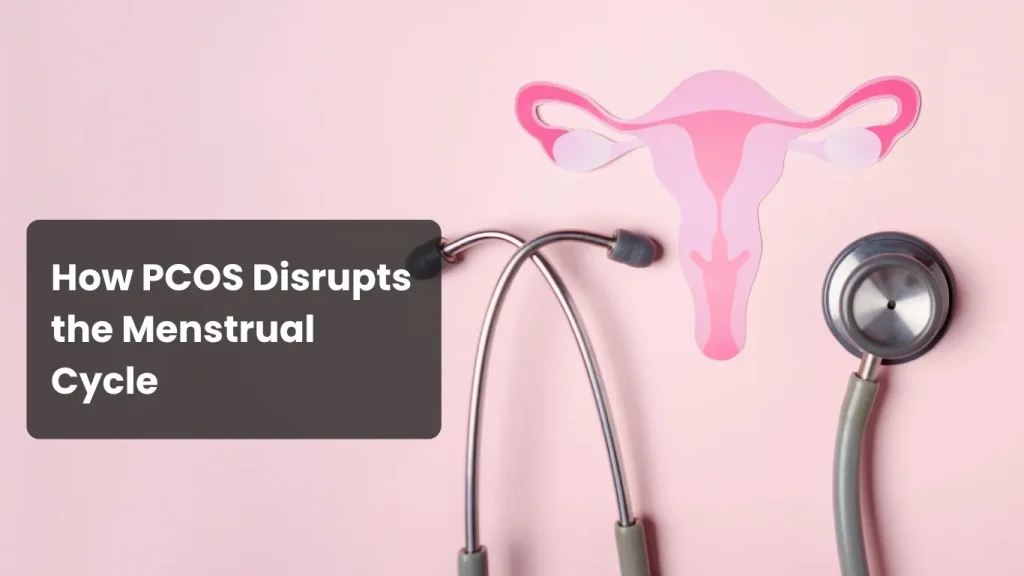
Because of these hormonal imbalances, the follicles in the ovaries may develop but fail to release an egg. Instead, these follicles can accumulate in the ovaries, appearing as small “cysts” on an ultrasound (hence the name Polycystic Ovary Syndrome, though “cysts” is somewhat of a misnomer—they are actually undeveloped follicles).
When ovulation does not occur (anovulation), the body does not produce progesterone, the hormone responsible for stabilizing the uterine lining and triggering a period. This leads to the hallmark menstrual symptoms of PCOS:
1. Oligomenorrhea (Infrequent Periods)
This is the most common menstrual symptom of PCOS. Women with oligomenorrhea may have fewer than eight periods in a year, or their cycles may be longer than 35 days. Some women may go months without a period.
2. Amenorrhea (Absent Periods)
In more severe cases, ovulation may stop entirely, leading to amenorrhea—the complete absence of a menstrual period for three or more consecutive months.
3. Heavy or Prolonged Bleeding
When ovulation does not occur and progesterone is not produced, the uterine lining (endometrium) continues to thicken under the influence of estrogen. When the lining eventually sheds, the bleeding can be exceptionally heavy, prolonged, and accompanied by severe cramping. This is because the lining has built up over a longer period than in a typical cycle.
4. Unpredictable Spotting
The unstable, thickened uterine lining can also lead to unpredictable spotting or breakthrough bleeding between periods.
Beyond the Period: Other Symptoms of PCOS
While irregular periods are often the first sign that prompts a woman to seek medical advice, PCOS is a systemic condition with a wide range of symptoms. The elevated androgen levels and insulin resistance can cause:
- Hirsutism: Excess hair growth on the face, chest, abdomen, or back.
- Acne: Persistent, severe acne, particularly along the jawline and lower face.
- Male-Pattern Hair Loss: Thinning hair or hair loss on the scalp.
- Weight Gain: Difficulty losing weight or unexplained weight gain, particularly around the abdomen.
- Acanthosis Nigricans: Dark, velvety patches of skin, often in the creases of the neck, groin, or under the breasts (a sign of insulin resistance).
- Infertility: Because ovulation is irregular or absent, PCOS is one of the leading causes of female infertility.
The Long-Term Health Risks of Untreated PCOS
PCOS is not just a reproductive issue; it is a metabolic disorder with significant long-term health implications if left unmanaged.
- Endometrial Cancer: The continuous buildup of the uterine lining without the shedding triggered by ovulation increases the risk of endometrial hyperplasia (precancerous thickening) and endometrial cancer.
- Type 2 Diabetes: The insulin resistance associated with PCOS significantly increases the risk of developing type 2 diabetes or prediabetes.
- Cardiovascular Disease: Women with PCOS are at a higher risk for high blood pressure, high cholesterol, and heart disease.
- Sleep Apnea: A condition where breathing repeatedly stops and starts during sleep, which is more common in women with PCOS, particularly those who are overweight.
Diagnosing and Treating PCOS
There is no single test for PCOS. Diagnosis is typically based on the Rotterdam Criteria, which requires the presence of at least two of the following three signs:
- Irregular or absent periods (oligo/anovulation).
- Clinical or biochemical signs of high androgens (e.g., hirsutism, acne, or elevated testosterone levels on a blood test).
- Polycystic ovaries visible on an ultrasound.
While there is no cure for PCOS, it is highly manageable. Treatment is highly individualized and focuses on managing your specific symptoms and reducing long-term health risks.
Lifestyle Modifications
For many women, particularly those with insulin resistance, lifestyle changes are the first line of defense. A balanced diet, regular exercise, and weight management can significantly improve insulin sensitivity, lower androgen levels, and restore regular ovulation.
Hormonal Birth Control
For women who are not trying to conceive, hormonal birth control (pills, patches, or rings) is a common and effective treatment. It regulates the menstrual cycle, reduces the risk of endometrial cancer by ensuring the uterine lining sheds regularly, and lowers androgen levels, which improves acne and excess hair growth.
Metformin
This medication, commonly used to treat type 2 diabetes, improves insulin sensitivity. It can help lower insulin and androgen levels, and in some cases, restore regular ovulation.
Fertility Treatments
For women with PCOS who are trying to conceive, medications like Clomid or Letrozole can be used to induce ovulation. In some cases, In Vitro Fertilization (IVF) may be recommended.
Taking Control of Your Health
If your periods are irregular, heavy, or absent, do not ignore the signal your body is sending. While PCOS is a common cause, it is not the only one, and a proper medical evaluation is essential.
At East Coast OBGYN, we understand the physical and emotional toll that PCOS can take. We are committed to providing comprehensive, compassionate care to help you manage your symptoms, protect your long-term health, and achieve your reproductive goals. Schedule a gynecological care appointment at our Brooklyn or Flushing clinic today to discuss your menstrual health and get the answers you deserve.